 Click to enter
Chess
When I was a boy, I used to boast about how good I was at chess, when in reality, I did not know how to play at all. Thinking back on it, I think I recognized that chess was a symbol associated with smarts, and I wanted so badly to be seen as a smart guy. The only problem was, my chess prestige was a lie. Worse, it scared off anyone who might have played me. At the age of 6 or 7, I was not surrounded by chess prodigies, nor anyone with the patience to sit down and play chess with me, to teach me, or to call my bluff. Therefore, I went undefeated for many years without ever playing a proper game of chess.
The mystique of chess never wore off over the years, and 2014 proved to be the year I would get the orientation I had been waiting for. 2014 was the year I spent traveling the world on my Watson Fellowship, and my first destination was France. What brought me to France was a painting I sought to see in person, Gaston Casimir Saint-Pierre’s Souja Sari, but that’s a story best saved for another time. What I also discovered was the first place I’d call home away from home: a culture of hanging out in parks with wine, jambon-beurre and apéritifs, walking from arrondissement to arrondissement, hopping on the metro and riding to new areas while I sketched, slacklining, boathouse barbecues along the Seine, spontaneous a cappella and late-night jams at L’entre Monde in Fort d’Aubervilliers, and more chess tables scattered through the parks than I had ever seen. That is where I learned to play chess, just as I learned to speak French: dans les rues. More specifically, at the Jardin du Luxembourg in Paris.
I recall sketching for a while at the Grand Bassin before deciding to stretch my legs and walk around the park. The Grand Bassin is the large fountain in the center, and if you walk toward the northwest corner of the park, toward the tennis courts, you’ll eventually see an area open up to a stark white pebble ground with dozens of newly planted trees too thin to provide any real relief from the sun. And huddled together around a cluster of tables were chess players: spectators quietly watching while the players struck the clock, moving pieces faster than I thought possible. I was drawn to the drama of the spectating and gleefully mystified by the beautiful complexity, confidence and grace behind the movements.
Swoosh-tick-clack, swoosh-tick-clack. Swoosh-tick-clack…
Thinking…
Swoosh-tick-clack, swoosh-tick-clack. Swoosh-tick-clack…
Échec.
Thinking…
Swoosh-tick-clack,
Échec.
Swoosh-tick-clack, swoosh-tick-clack
Échec et mat.
A smile, ahs and oohs, and a handshake.
I only watched that day, but it stuck with me. There was something about the quietude of it all. So much was going on, so much communicated and so much unspoken. What I learned quickly was that, like any game, chess has a culture behind it. Though I was born on Staten Island and grew up taking the ferry to Manhattan, I was too young to really appreciate places like Washington Square Park, where chess hustlers empty your pockets $5 at a time as they trash talk you and take advantage of your every blunder. If there was trash talking in Paris, I did not understand it at the time because I could not understand French, which added to the romantic naivety of my experience.
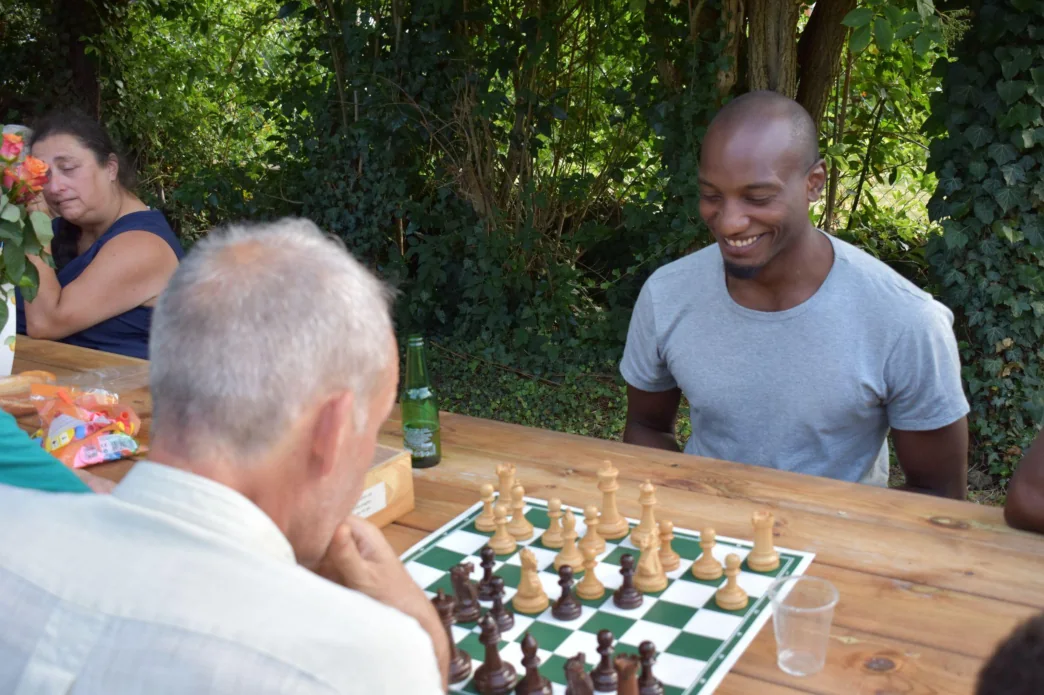
When I returned a couple of days later, I headed straight to the chess tables and, as expected, a couple dozen people were either playing or crowded around a table. This time, I sought out someone sitting alone, and with a gesture to the open seat, I asked if I could play. The older gentleman nodded and pointed at the seat before holding up two closed fists in front of me, a universal sign that means “pick one.” I cannot recall which color I wound up picking, and it doesn’t matter. I got beat so badly and so swiftly over the course of three back-to-back games that when I offered to play a fourth, the gentleman kindly scoffed and waved me off with a curt gesture. “I too strong,” he said. And he was right. So I stood up, thanked him with an obligatory handshake, and stepped back as he accepted the next victim, one who gave him a bit more of a challenge.
That trip planted the seed, but it took time to grow. Back home, I kept playing on and off, and by 2016 I had enough confidence and drive to challenge myself to play on chess.com at least once every day.
That same year, I played in my first chess tournament, the Bennington Open in Bennington, Vermont. I won one game out of four and walked away with my first official rating: 918. My scoresheet from my first-round game against Catherine Yavarone didn’t survive, but despite losing, it was the most memorable. She was not only the strongest opponent I faced, rated nearly 1600, but it was also my closest game. I recall pushing my c-pawn up to c5 in the endgame, racing toward what could have been a win. If I remember correctly, she pushed her pawn from b7 to b5, and instead of capturing en passant, I pushed my pawn to c6, the blunder that cost me. After the game, she graciously explained how capturing would have put me in a strong position, one that may have given me the win.
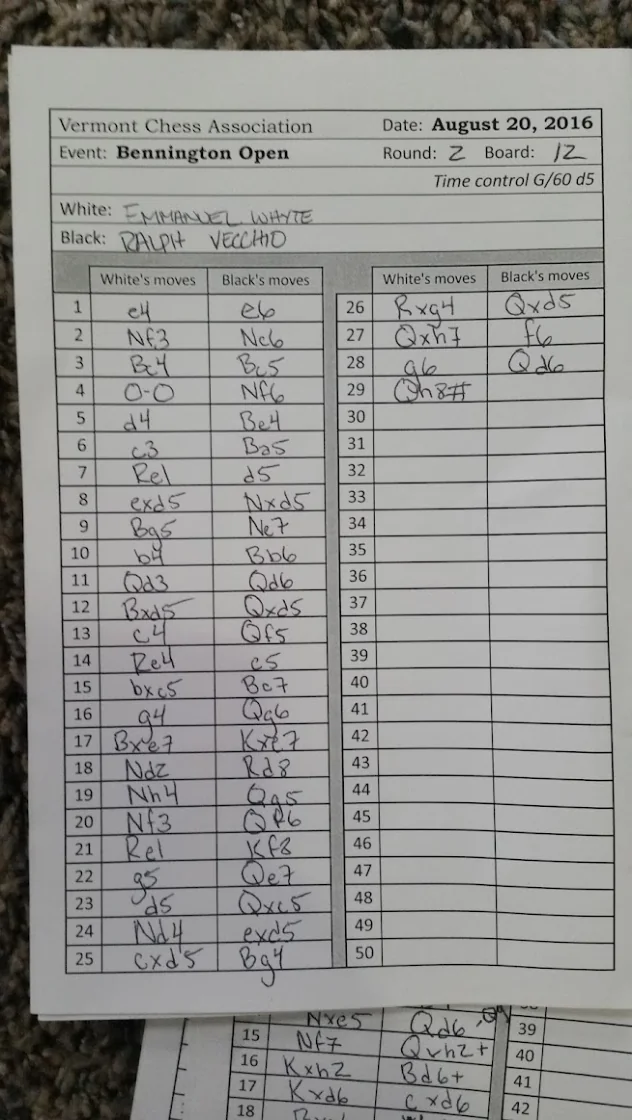
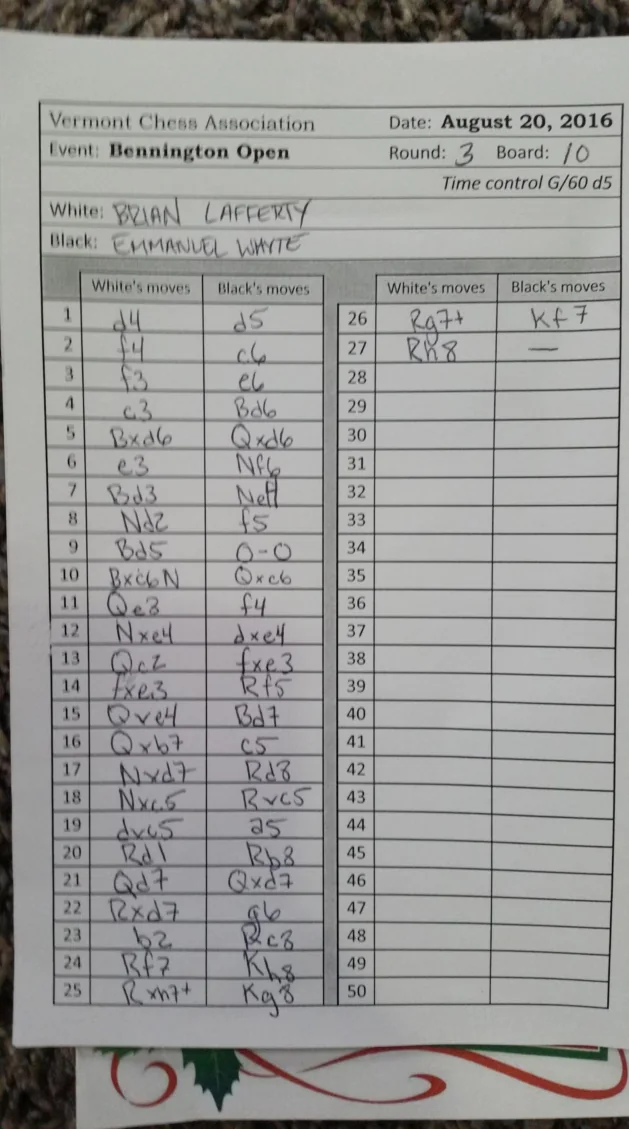
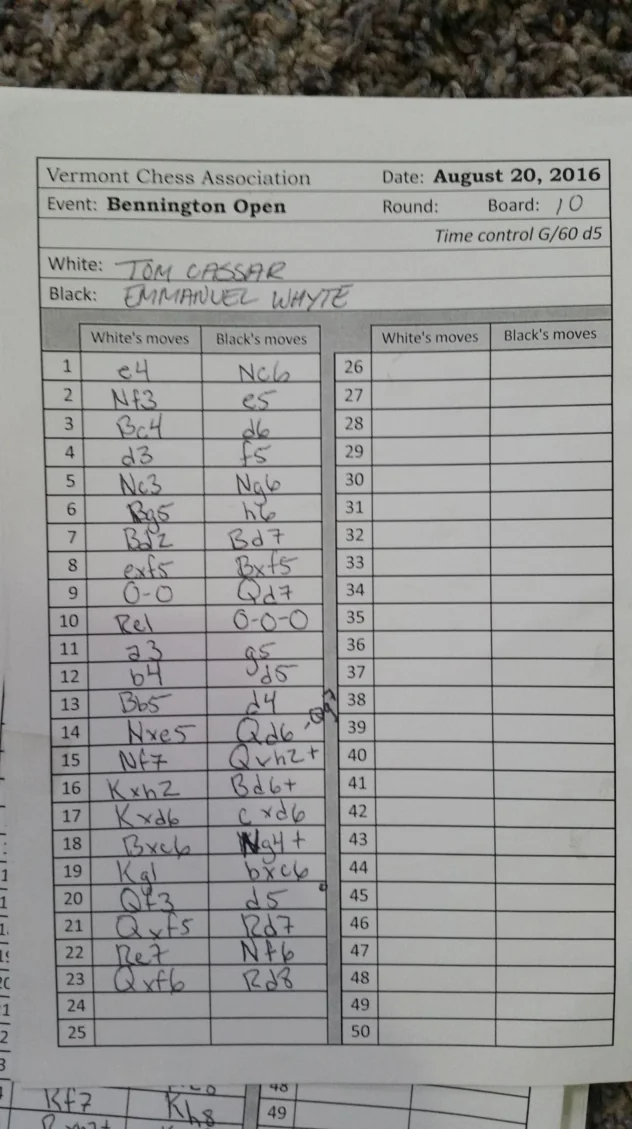
If you study the games line by line, you’ll observe that I was not very good. And that’s OK. I had some natural skill, enough to hold my own against players at my level, but it would have taken some luck to beat stronger players like Catherine. The tournament showed me how inexperienced I really was, and my desire to practice made me open to something I had never had: a coach.
When I returned to Paris in 2017, I knew exactly where to go. My persistence showing up to the tables led me to meet someone who would turn out to be my first chess coach: a traveling nurse from Guadeloupe who was also a talented musician. At the time, I believe he was rated in the 2200s, which would put him around Candidate Master (CM) strength. The deal was that we would meet and speak in English so he could practice, and in exchange, he would teach me how to play chess. We would sit outside in the backyard in Villiers-le-Bel with a chess book open as he moved the pieces and explained the significance of each move. Most importantly, he taught me how to study games and learn from my mistakes line by line. That is where I built good habits and learned to read the board, not just move pieces around.
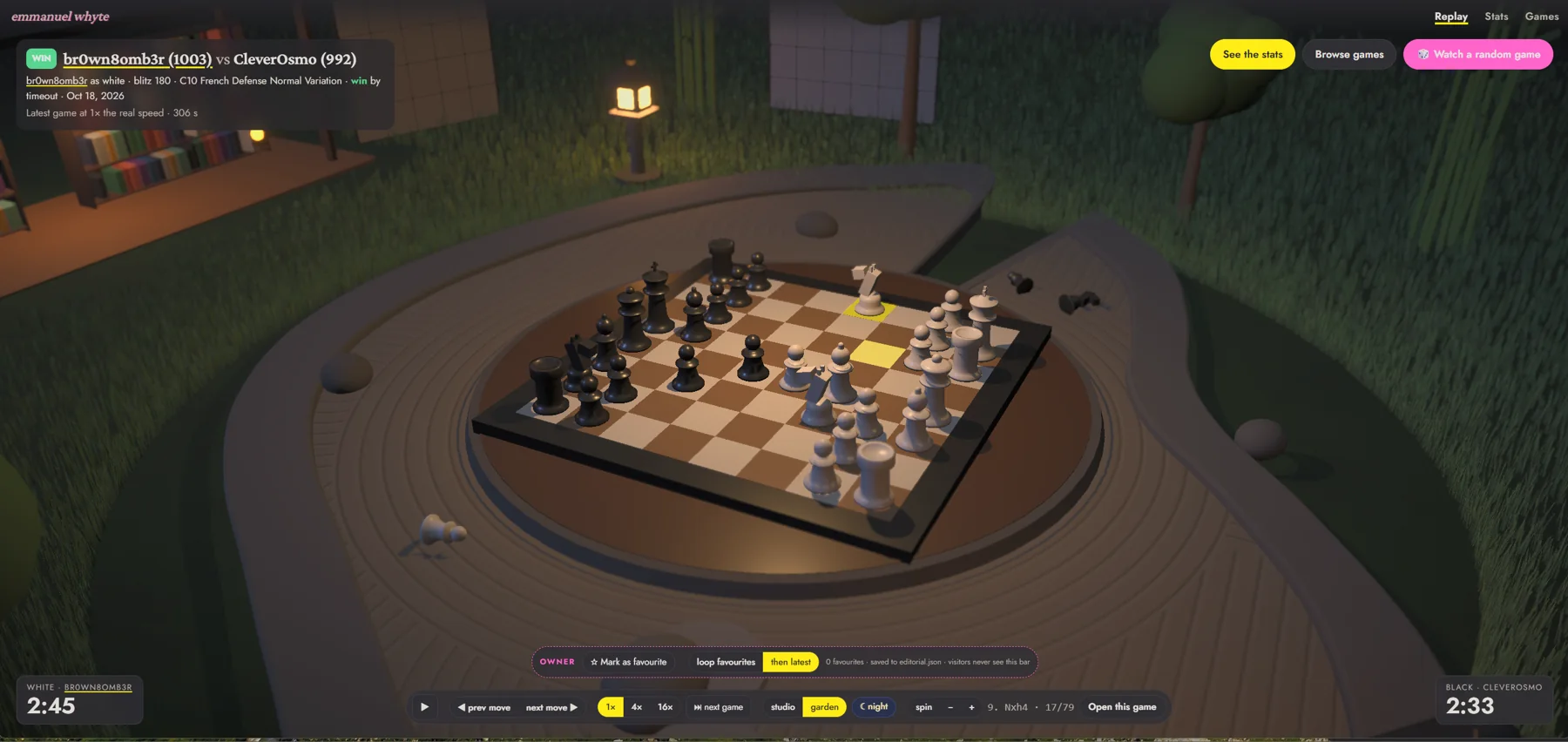
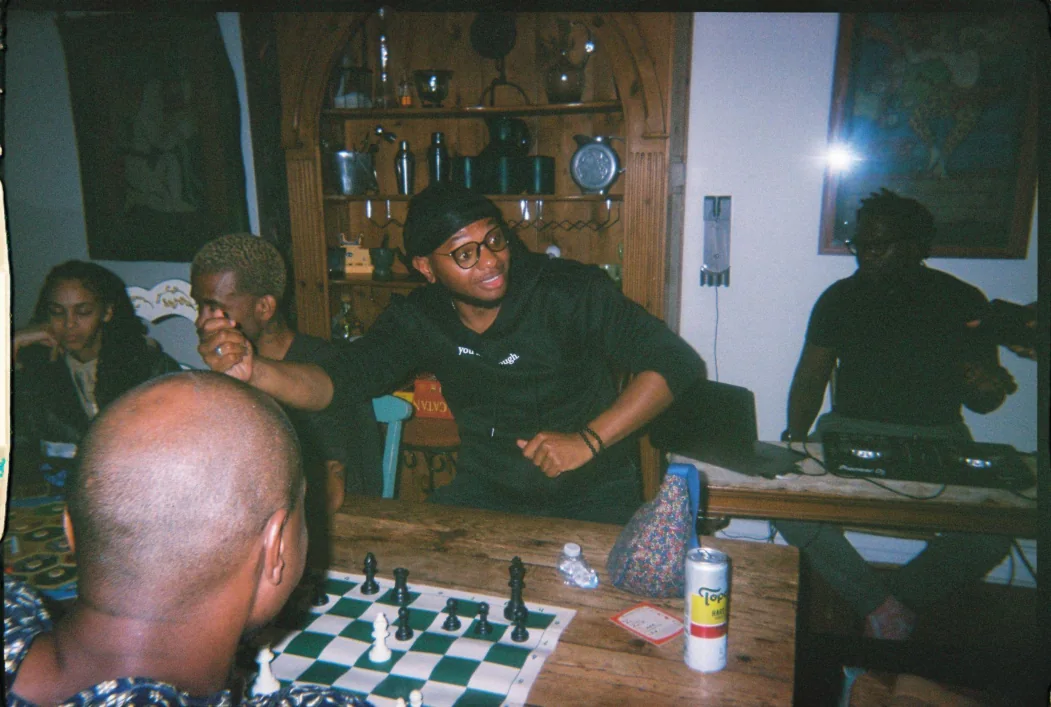
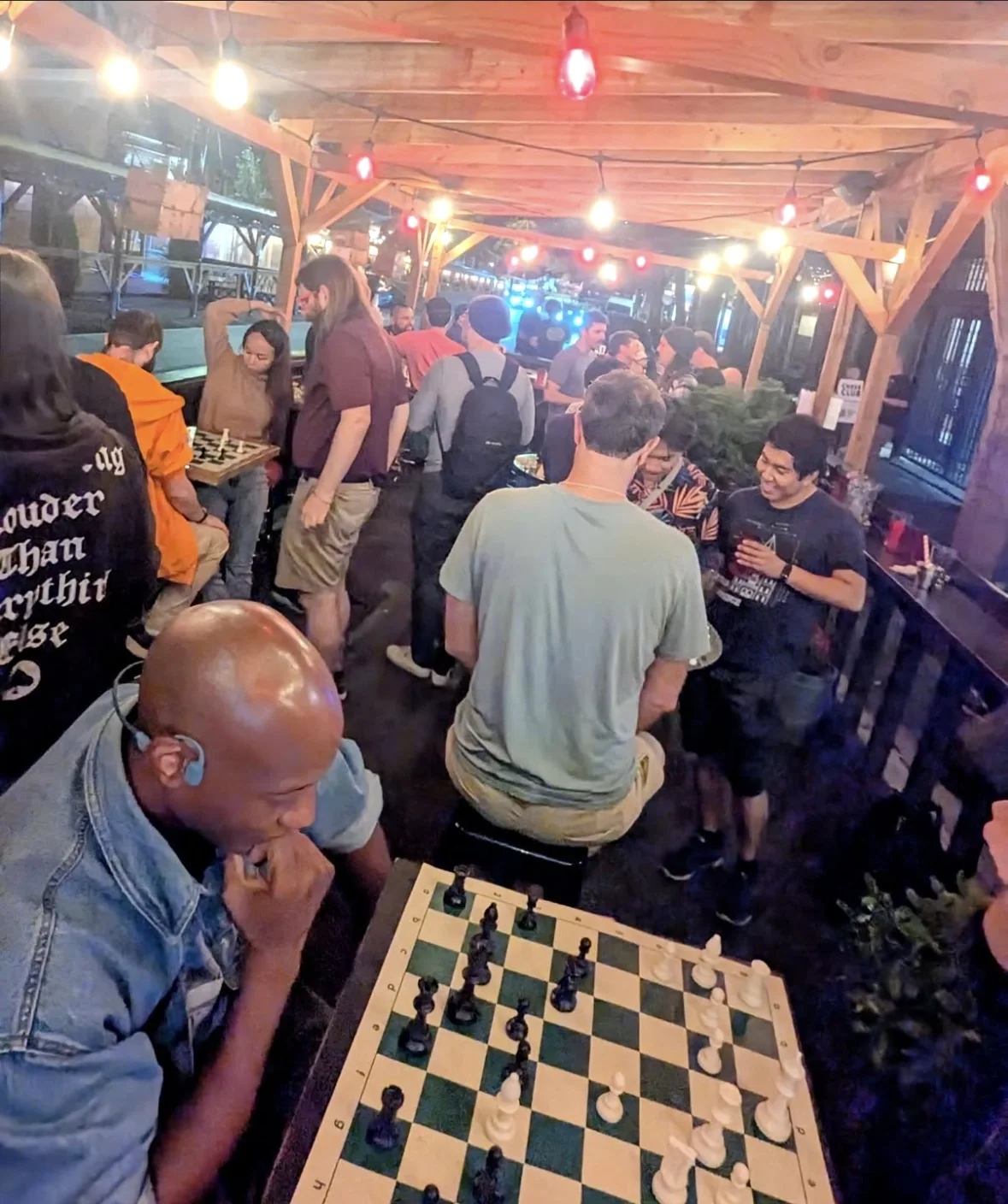
Now, I can nonetheless boast again, and this time I kept all of the receipts. Since 2016, I’ve played over 13,000 games with a nearly dead-even 50% score, and 63 more losses than wins. I play mostly blitz and bullet, which is great for speed, but not so good for building good habits. Occasionally, I’ll slow down and play rapid. Even better, I’ve found a thriving chess community in my new home in Seattle, giving me the opportunity to play over the board with good company and competition. Another welcome reminder that chess is best enjoyed with people, and I now feel humbled by the game as much as I feel embraced by the culture.
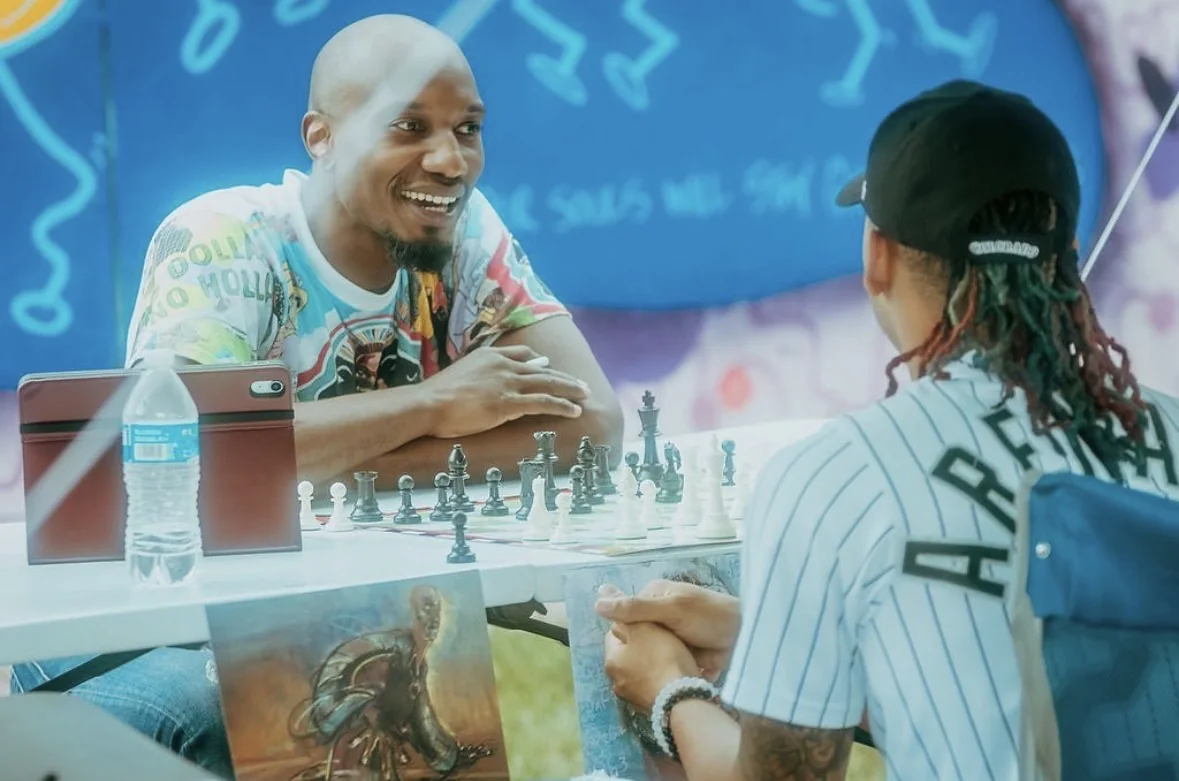
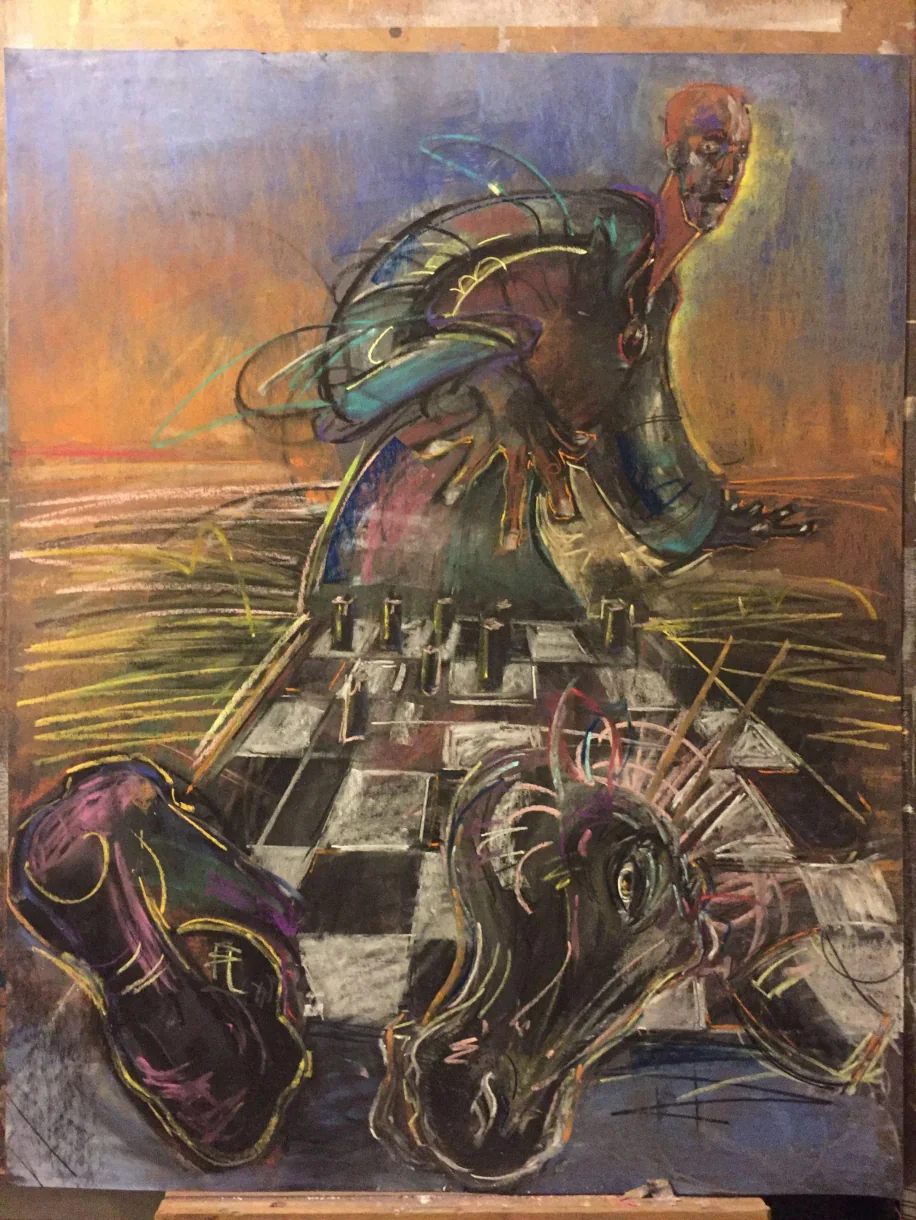
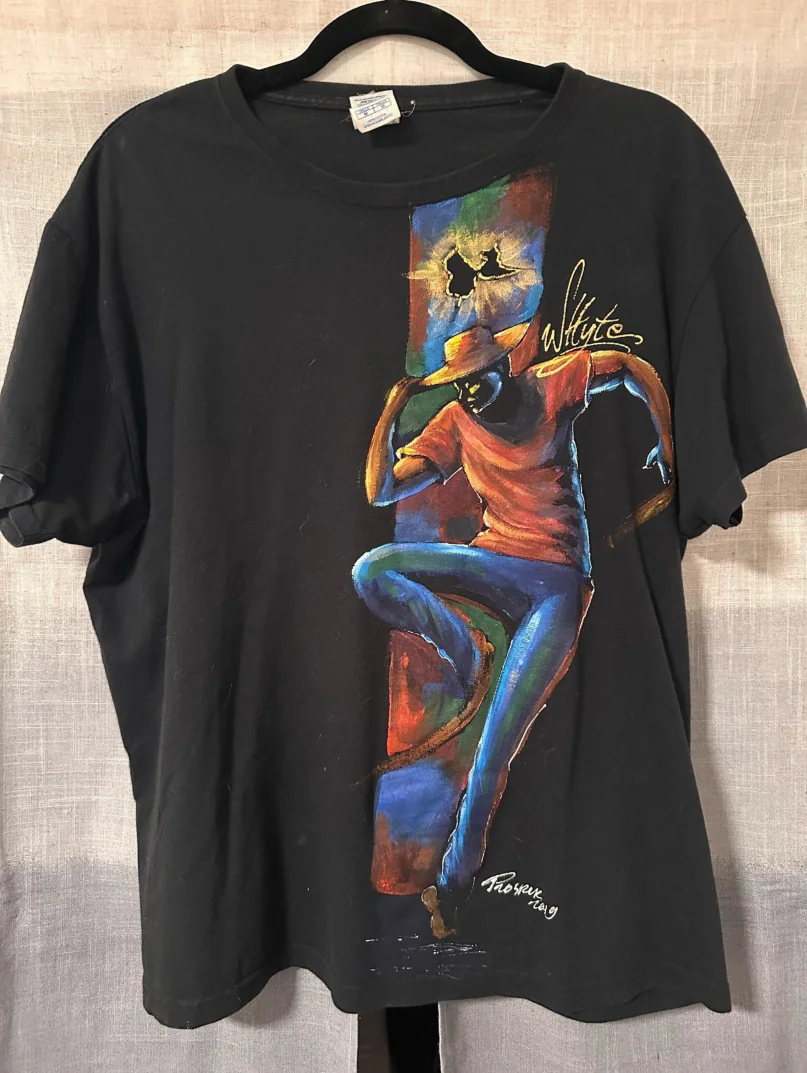
A few years back, I reconnected with my coach from Guadeloupe and shipped him one of my favorite chess-themed drawings. In return, he surprised me with a hand-painted shirt with my name on it.